
He maumahara
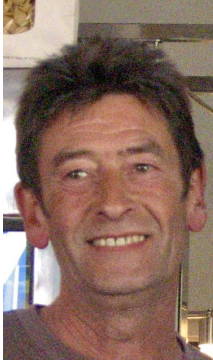
George Salter
1947 – 2020
One of physical education's champions and an inspirational teacher educator
Tribute
A life of dedication and service
Haere, haere ra koe e Hori te taonga o te mate. Aanei ra mātou, to whānau o Te Ao Kori I mua, āinei hoki e mihi nui atu ki a koe, e te pāpā.
Ahakoa, kare taea e mātou, a tinana, ēngari, ka taea a wairua.
Nōreira, haere, kua uhia koe ki ōu taonga ki ngā kākāhu o tēnei hunga o te mate. Kua taka I a koe ki te kupu kōrero, ki te puna roimata, kua mihia ki runga ki a koe.
Nōreira, haere, haere, haere atu.
Translation.
Farewell, farewell, go George as a precious taonga. Here we are, your family of the Ao Kori of the past and of now we acknowledge you, our papa.
Although we did not arrive in person we are here in Spirit. So therefore go. You have been wrapped in the precious clothes of this thing called death and you have been clothed in the words of farewell and immersed in an endless spring of tears. These words of greetings we have given you, so leave us and go in peace.
Farewell.
In the passing of George Salter, we have lost one of physical education's champions and inspirational teacher educator. George made a significant impact to the profession through his teaching and his scholarship, particularly during his twenty years at the University of Waikato. He never lost sight of the past when gazing across the physical education landscape and envisioned possible futures with an open mind. His contribution to the curriculum and those who teach it is acknowledged.
George was born in Somerset, England, and studied physical education at Loughborough University. He then 'cut his teeth' teaching in the challenging and difficult environments of Inner London schools. During this time, New Zealand was experiencing a teacher shortage, including physical education specialists, and George responded to a New Zealand Department of Education recruitment drive. This led to him accepting a teaching position at Rutherford High School before moving to Wellington where he taught at Onslow College. His impact, as a well-qualified and effective teacher, was acknowledged when appointed as a Physical Education Advisor to schools. One of his tasks was to support the national achievement-based assessment trial which was carried out at Sixth Form Certificate (now NCEA Level 2). As the trial progressed, he was appointed National Moderator, working alongside NZQA to ensure the programme was further developed. This trial became the precursor for a 7th Form (Year 13) course that subsequently evolved into what is now NCEA Level 3.
George's leadership was again acknowledged when appointed as a Lecturer at Hamilton Teachers' College in 1988. His professional expertise was quickly recognised by students who valued the way he prepared them for the realities of teaching physical education. He thrived in teacher education and remained on staff until retiring in 2008.
George's shift to Aotearoa New Zealand and his marriage to Hinemoa heralded an introduction to Māori culture. As his knowledge and interest in tikanga Māori grew he became very proactive with the development of Te Reo Kori, now called Te Ao Kori. One project was a two-year professional development contract for aspiring teachers on the East Coast. With the assistance of Ralph Walker, local Physical Education Advisor, they used Te Reo Kori as the nucleus of their programme. George and Ralph, along with Andy Fraser, continued to develop this initiative and it provided the basis for numerous PENZ conferences, and teacher development workshops. Given the bond formed between these three Te Reo Kori pioneers, Ralph and Andy subsequently experienced George and Hinemoa's manaakitanga whenever working with teachers in the Waikato.
George's focused contribution to the development of Health and Physical Education in the New Zealand Curriculum was significant. He was a stout advocate for ensuring that the curriculum had a strong bi-cultural focus. His ability to clearly articulate this need was influential, and he was vociferously aghast at political manoeuverings that attempted to dilute this focus. On an academic level, George published several articles articulating the value and importance of Te Ao Kori. Many of his works were published in the PENZ Journal and attracted national and international attention. Two examples, both published in 2000, were Marginalising indigenous knowledge in teaching physical education: The sanitising of Hauora (well-being) in the new HPE Curriculum, and Culturally responsive pedagogy and the renaissance of a Maori dimension in physical education: Te reo kori as cultural taonga. As an acknowledgement of his scholarship George was appointed Editor of the PENZ Journal for 2001–2003.
George always taught with panache, passion, and personality. His style was naturally relaxed, effervescent, and characterised by a with-it-ness that typified his inspiring teaching. His discussions in class signalled his empathy towards the many social and political issues that affect society today. George's zeal, impact and social conscience never diminished.
If you would like to contribute memories, photos or words to this tribute, please email [email protected]. Contributions from whānau, friends and colleagues are warmly welcomed.