
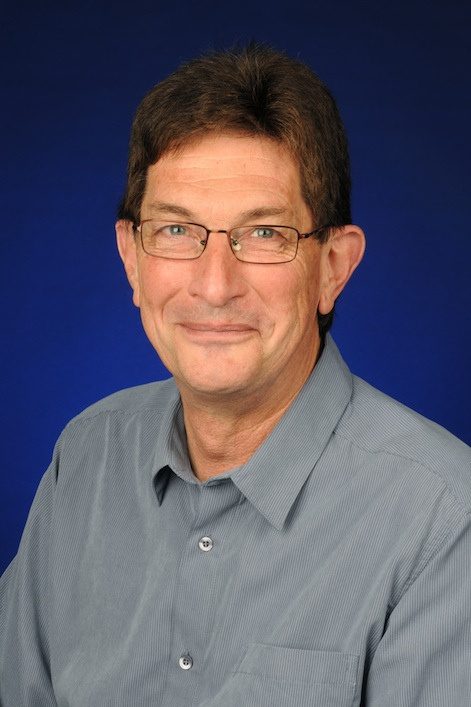
Clive Pope
16 November 1955 – 10 May 2026
Teacher, scholar, Associate Professor, and friend to physical education in Aotearoa
“Kua takitahi ngā whetū o te Kāhui o Matariki. E te kōtuku rerenga tahi, moe mai rā.”
The stars in the constellation of Matariki are growing fewer, and fewer. Therefore, to our beloved kōtuku, Clive, we have enjoyed witnessing you flourish in full flight, now rest in love.
– Ross Paniora
A life that touched many
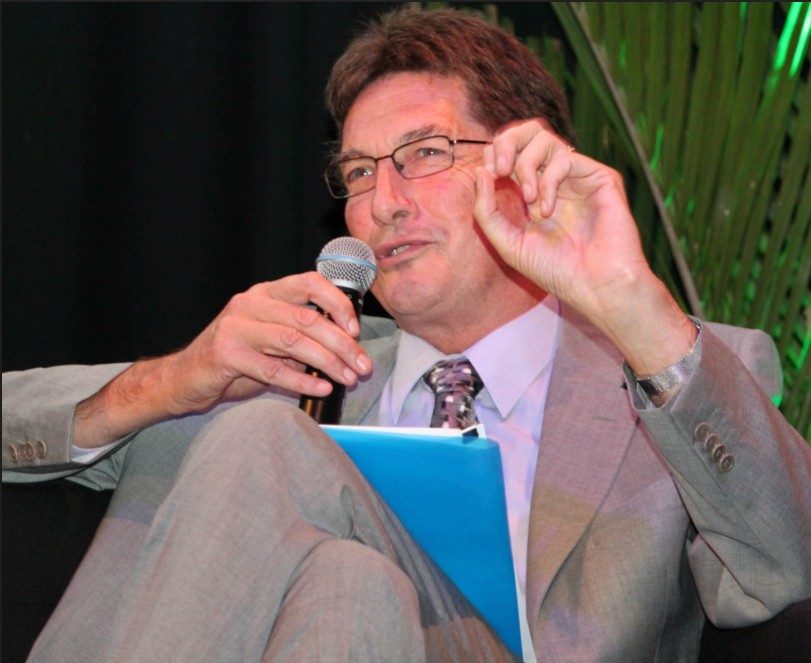
With the passing of Clive Pope on 10 May 2026, we lost one of our respected and admired education identities. Throughout his career Clive was an inspiration for many. Such was his energy, generosity and influence, it is difficult to pay a fitting tribute to this very likeable and charismatic man.
Be it work or play, he always exhibited a high degree of personal and professional integrity, but wasn’t one to talk about himself. He was, however, very interested to hear about what you were doing. Having a chat over coffee was never a chore but rather an inspiring encounter.
Early life and schooling
Clive was born in Wellington, and when he was nine his family moved to Christchurch. He was a red and black fan ever after. A tall, fast-growing teenager, he attended Burnside High School from 1969 to 1973, where schoolmates remembered him as a loyal friend with a quick and warm wit and always good company.
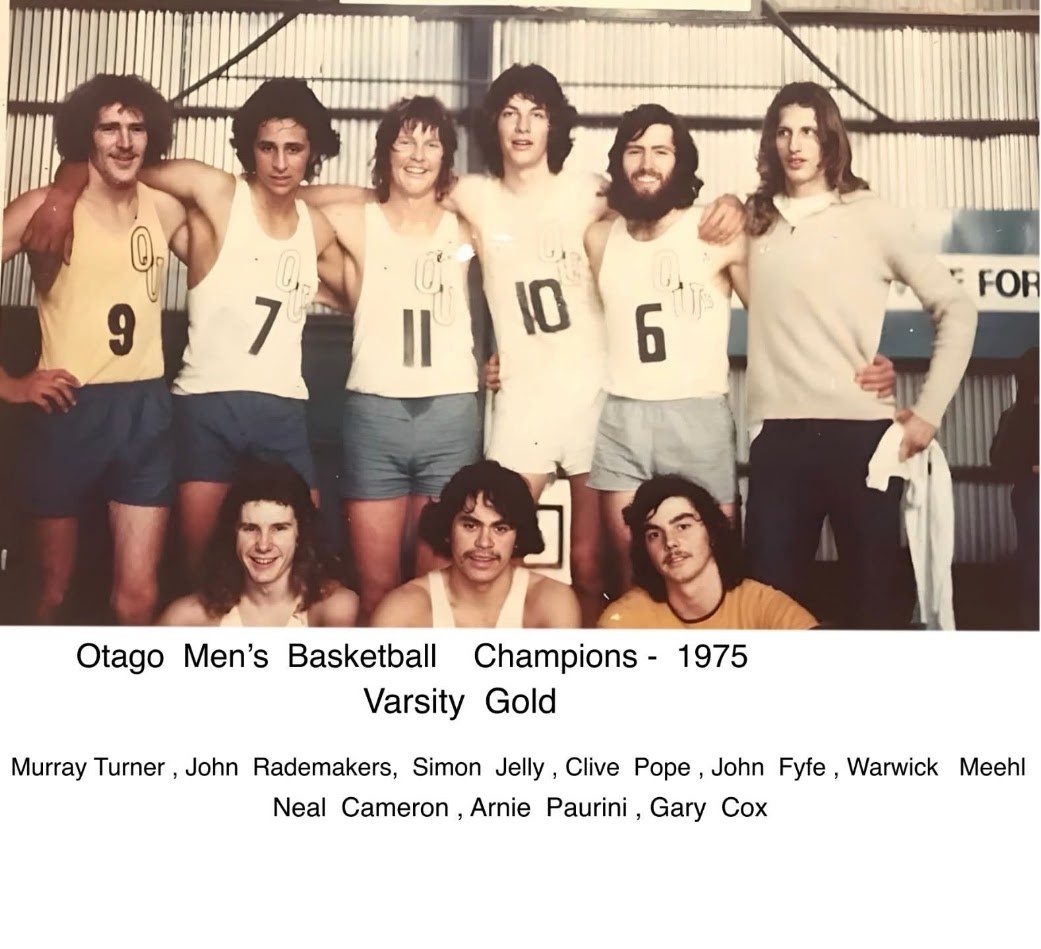
Classroom work was something that ‘had to be done’, while physical education, made-up games and a variety of sports were central to his life. He excelled at high jump, race walking, cricket and basketball, the last of these continuing at university, where he was a valuable member of the championship-winning Otago University basketball team in 1975. He relished the ‘smell’ of success.
At Burnside, Don Chadderton, Head of Physical Education, had a significant impact on Clive’s life. He recognised Clive’s potential, coached him in athletics, and nurtured some of the leadership qualities that would become one of his defining strengths. It was Don who encouraged him to think about going to university and studying physical education with the intention of becoming a teacher.
University of Otago
In 1973, Clive was interviewed by Professor Smithells, Dean of the School of Physical Education at the University of Otago, for one of the much sought-after places in the three-year Diploma of Physical Education. Like many from out of town he lived in Arana Hall in his first year and enjoyed a lively time out of the lecture theatre, but was smart enough to know what was required to pass. In his second year he lived in a flat known as ‘The Palace’ on Cumberland Street, succeeding both socially and academically. In his third and final year he moved to a flat in South Dunedin and, by chance, met his future wife, Jill, a physiotherapy student living in the same flat.
A born teacher: full of fun, always connecting, always a little theatrical.
Clive’s gangly six-foot-six frame was less suited to some of the Diploma’s practical requirements, particularly swimming, which delayed his graduation. Nonetheless, his potential was such that he was accepted to study for the Diploma of Teaching at Christchurch Teachers College. From the outset it seems Clive was born to be a teacher: a sense of fun, an ability to connect with others, and an effective use of technology all contributed to his theatrical teaching style. After graduating in 1978 he secured a permanent position at Mairehau High School in 1980.
Finding his feet as an educator
At Mairehau High School, Clive was full of untested, novel and innovative ideas, and committed to making a positive difference to those he taught. Predictably, he came up against an HOD whose views on teaching physical education differed from his, and although his effervescent approach was tempered somewhat, he adopted efficient management routines and maintained high standards. Having the HOD looking over his shoulder frustrated Clive, but as he admitted later, they were all lessons in the learning. Despite the frustrations, he revamped the junior programme, introduced Sixth Form Certificate Physical Education, and helped develop an Outdoor Education programme.
In 1984, he accepted the HOD position at the not-quite-finished rebuilding of Cromwell College in Central Otago. As HOD, and without a gymnasium for most of the first year, he and his staff developed an innovative programme, often using the community hall. A staff member at that time, Ross Paniora, speaks fondly of Clive’s never-ending enthusiasm for the job, inclusive leadership and willingness to confront problems, many of which were to do with finding suitable facilities for the PE programme. Working alongside Ross inspired Clive to acknowledge and embrace the Māori culture and begin his te reo journey. As his career unfolded, this new learning was fully integrated into his professional life.
He enjoyed inventing games that ensured high rates of enthusiastic participation.
Many of his students will never forget the crazy but exciting games they played.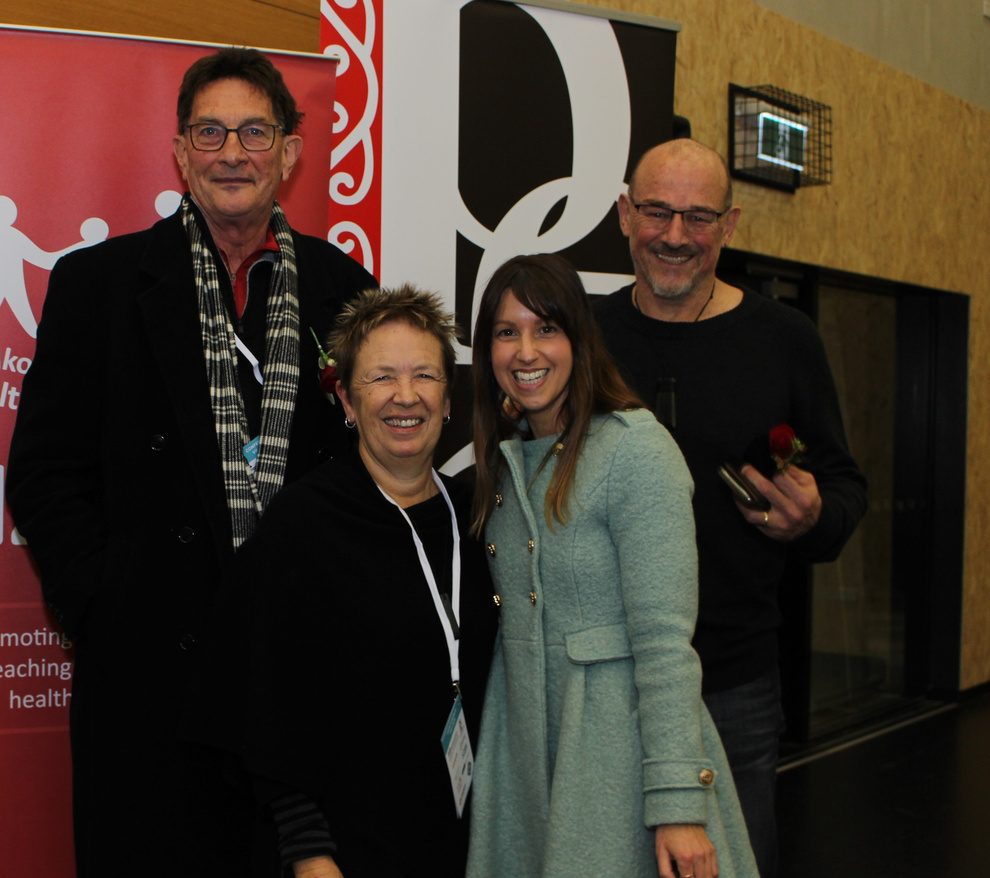
A national reputation takes shape
Visits from the Inspectorate in the first few years tabled glowing reports noting the department’s commitment to quality programming and the enthusiastic participation and positive attitudes of the students at all year levels. By the mid 1980s, Clive had a national reputation as not only an excellent and much-liked teacher, but an exceptional HOD displaying innovative and inspirational leadership. His substantial curriculum development work with Sixth Form Certificate Physical Education, and creating the foundation for 7th Form Bursary Physical Education, proved profound and enduring. His contribution to applying Achievement Based Assessment was ground-breaking, influencing assessment in physical education and other senior subjects. Another noteworthy contribution, from Year 6 upwards in schools across New Zealand, was co-leading the introduction of the Sport Education model into the physical education programme.
In 1989, Clive accepted a position as Lecturer in the Physical Education Department at Hamilton Teachers College. It wasn’t long before he was making his mark on future teachers of physical education. Meanwhile, there were rumblings in the community about the need for a sport and recreation degree in the North Island. This aroused Clive’s interest, and he volunteered to be an ‘academic’ voice on a community group whose proposal was approved by the University of Waikato for its first intake of students in 1993.
The scholar emerges
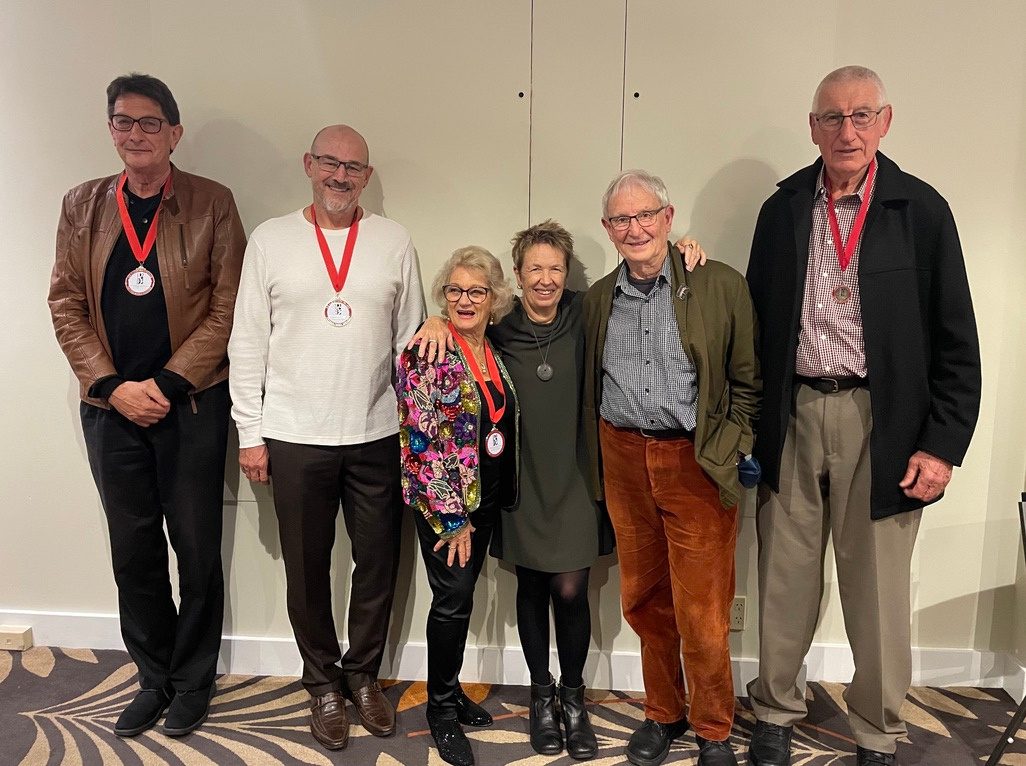
In 1991, Hamilton Teachers College merged with the University of Waikato, and former College staff were now expected to build an active research agenda. For Clive, the first step was upgrading his Diploma of Physical Education. In 1992 he enrolled in the Master of Education, and three years later submitted a thesis titled An ethnographic investigation of a sport education curriculum model.
Enthused with research, the next step was a PhD. Influenced by the work of Professor Daryl Siedentop of Ohio State University, creator of the sport education model, Clive sought to study under his guidance. With Jill’s support, he accepted an Ohio State scholarship and took three years’ leave from Waikato to study in Ohio. It wasn’t long before he was up to his eyeballs reading numerous articles about research methods and other scholarly pursuits. He relished the new knowledge, particularly that relevant to his own research. His desire and focus paid dividends and he went on to complete his PhD and returned to the University of Waikato. This ultimately led him to be promoted to Associate Professor.
A legacy of inquiry
Clive was an avid reader. His two offices, home and work, could easily be mistaken for small libraries, from which he willingly shared the contents of countless books with students and staff. Over the years, sometimes helped by others, he generated over half a million dollars of research funding, the vast majority devoted to better understanding young people’s experience of sport and physical education. His many research interests included the relevance of a sport education curriculum at high school, key competencies in physical education, sideline behaviour at junior sport, an evaluation of Sports Force, issues with physical education and sport in primary schools, the play.sport project, why secondary school teachers leave coaching, the lives of carded athletes, and how youth culture shapes the Maadi Cup.
His expansive research agenda included more than 50 peer-reviewed articles and reports written for funding organisations such as Sport Waikato. He gave 75 conference presentations along with several keynotes at international and national conferences, among them the Phillip Smithells Memorial Lecture at the ICHPER Oceania Conference in Wellington in 2006, the Future Directions Conference in Pittsburgh in 2007, the NZ Recreation Association Annual Conference in 2007, and the Lord Porritt Memorial Lecture at the NZ Centre for Olympic Studies, University of Canterbury, in 2007.
In the lecture theatre and beyond
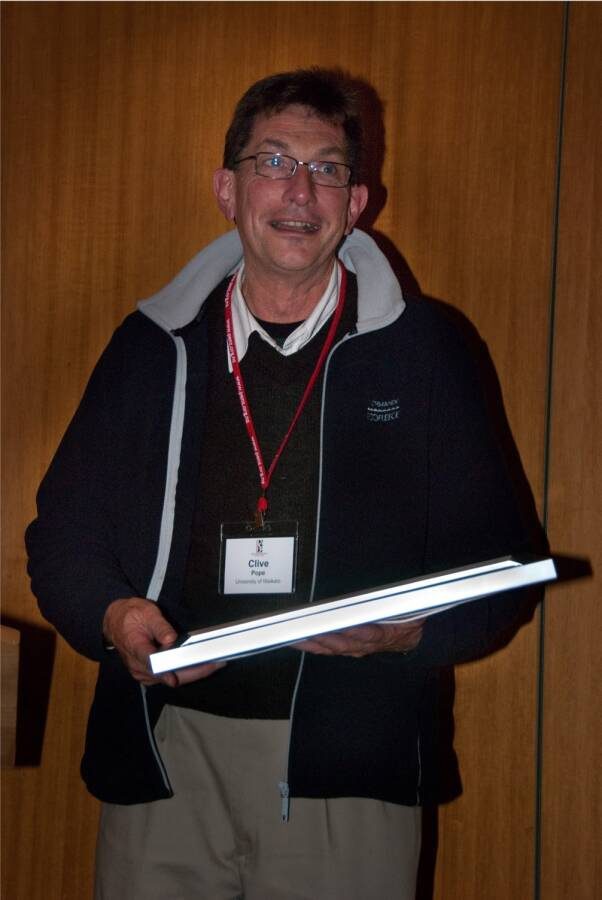
One enduring aspect of Clive’s work was his commitment to ensuring that the ‘stories’ from his innovative and influential work were readily available to those in New Zealand, enhancing physical education and sport practices here and abroad. Such a reputation meant his expertise was frequently called upon by Regional Sports Trusts, national sports bodies, the Ministry of Education and Sport NZ. Even though he thrived in these situations, the outcome was always about meeting the needs of those he engaged with, rather than himself.
Clive took on his share of senior responsibility. His many contributions included being Chairperson of the Department of Sport and Leisure Studies, a member of the University Scholarships Committee and the Hillary Scholarships Committee, the School of Education Promotions Committee, the tertiary representative on SPARC’s National Junior Sport Reference Group, and for several years NZQA Monitor for the Southland Polytechnic Bachelor of Health Science.
In a sense, he treated the learning environment as a theatre in which all the players had a role to play, even though they would process the content in different ways.
Irrespective of the situation, be it a practical class, open discussion or lecture, Clive was always well prepared and wanted to fulfil the audience’s needs. His attention to detail meant his lectures were well received and drew accolades. For Clive, incorporating entertainment and off-the-wall comments and visuals was a critical part of his message, and most students turned up knowing they would get their money’s worth of knowledge along with some unusual explanations. His approach drew many accolades; in 2000 he was awarded a prize for the best Oral Presentation at the Pre-Olympic Congress in Brisbane, and in 2015 he received a University of Waikato Teaching Excellence Award.
The Garden, the Game & the Kombi’s
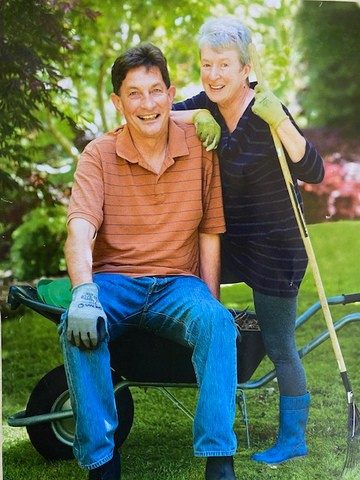
One of Clive’s most treasured pursuits was the garden, where he and Jill spent hours nurturing their 230 different maples. At different times of the year the colourful display was a sight to behold. Having heard wonderful stories about the collection, the editor of NZ Gardener magazine interviewed them for an illustrated story that touched the hearts of many. Soon they were inundated with invitations to speak at garden clubs and to give tours of the garden, and being altruistic, they shared their joy with others and loved the experience. Meanwhile Clive the scholar wanted to know what gardening means to the individual, so he put on his researcher’s hat and produced an autoethnography, sharing the ensuing article, “My Dirty Story about Gardening: A Visual Autoethnography” via a research journal.
Clive was also an avid sports fan. In the USA he became a passionate fan of the Buckeyes, the Ohio State University American football team, and back in New Zealand he would tune into ESPN, disturbed at your peril. He adored Mr Bean, Fawlty Towers, The Young Ones and Monty Python. Few would know that in his first couple of years teaching he also taught music classes; the number of vinyl records and CDs he purchased revealed listening to music as one of his soothing passions, and he frequently had music playing to welcome students into the lecture theatre.
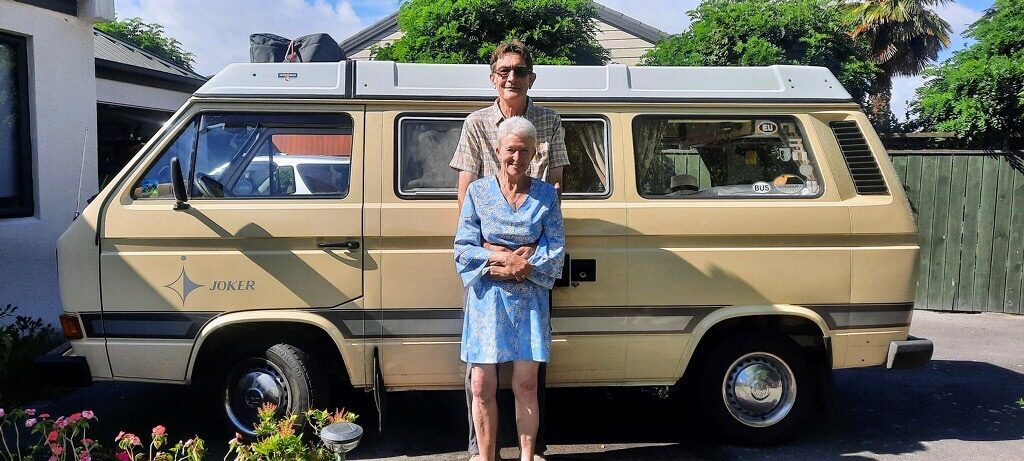
If you wanted to know about VWs, Clive was the man to ask. Over the years he owned several, including Kombi vans, fitting for someone free-spirited and notoriously friendly. Not wanting to miss the comforts of home, the Kombi had an espresso maker and a quality sound system. Although he intended to use it a little more, sadly one’s intentions and plans don’t always follow the script.
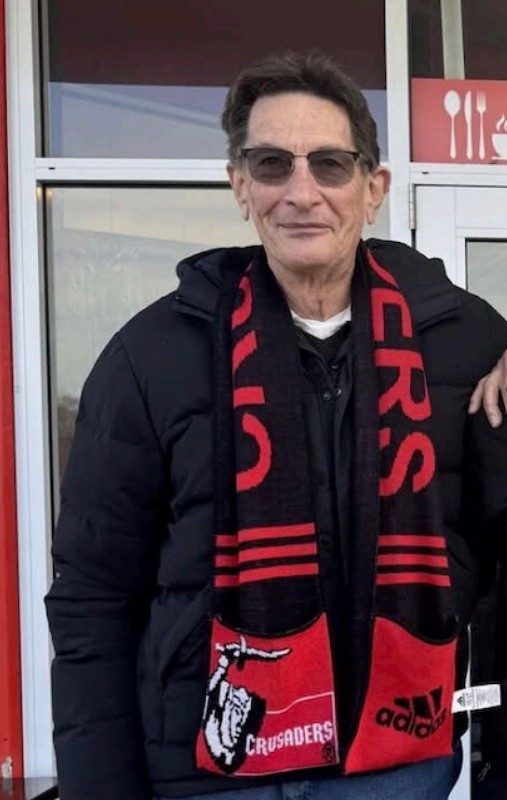
Farewell
Clive was a humble and gracious man who valued fellowship over acclaim. In his own words, he was ‘just doing my job’. In departing, this taonga, our highly treasured friend and colleague, would typically have said of himself:
E iti noa ana, na te aroha
Though my present be small, my love goes with it.
Aroha nui,
Bevan Grant, Ian Culpan, Murray Turner and Ross Paniora
If you would like to contribute memories, photos or words to this tribute, please email [email protected]. Contributions from whānau, friends and colleagues are warmly welcomed.