
Back in the Ring: What the New HPE Curriculum Opens Up
Date: 25 Sep 2026
Last year, I called the draft Health and Physical Education curriculum a straight-up body slam for our students. Hauora felt sidelined. Te Ao Kori appeared as a choreography context. I could see plenty of doing, but much less learning through and about movement.
The September 2026 curriculum gives us another round. Reading across Phases 1–4 (Years 0–10), I can see more of the PE teachers know and value. I can also see headings and gaps we need to keep questioning.
So, as we read it, what should we hold on to? What needs to change? And where do we have room to make thoughtful teaching choices?
PE is back in the ring
The draft felt a bit like a Temu version of Hulk Hogan: it had the PE outfit on, but something essential was missing. The September curriculum brings more PE back into the ring.
I was pleased to see learning in, through, and about return to the Physical Education strand. But the strand says “physical activity”, where Arnold’s (1979) framing is learning in, through, and about movement. That is more than a wording tweak. Movement is the concept that lets us teach and examine play, expression, culture, identity and our relationships with others and place. “Physical activity” does not do the same work.
If we want a knowledge-rich PE curriculum, we need to get the language right. This is one call I think we should ask the Ministry to review: change “physical activity” to “movement” in the strand description. Let’s go to the bunker and hope for a better call than the Warriors got in the semis!
A lot of the learning will feel familiar. Teachers already use games to explore decisions, feedback to support learning, and group challenges to examine leadership and inclusion. The curriculum now sets out more specific knowledge and practices across the phases. That gives us a useful question for an existing unit: What are students learning here, beyond taking part?
More than a skill we can tick off
One heading I am still wrestling with is skill acquisition. It can draw our attention to the skill a student shows at the end. As teachers, we also care about the learning along the way.
The curriculum recognises that skills develop through practice in different conditions. Students use feedback to adjust what they do. What do they notice and try next? I would have preferred skill learning as the heading. We are educators, after all. What are students learning in, through, and about movement?
Under skill acquisition sits kinaesthetic awareness. It sounds pretty bougie, like the rhinestones on PE’s new wrestling outfit! It was absent from the draft and is new as explicit knowledge in the PE curriculum. So what does it mean?
Kinaesthetic awareness is knowing your body in movement: sensing your position, timing and effort, then using that information to adjust. Students already do this. Now we are being asked to help them notice it, explain it and use it when conditions change. A student kicking on wet ground might notice their footing shift, adjust their balance and try again. The learning is in how they work out what to change.
Then there is the instruction to move in hot and cold conditions. At first glance, we could all be out buying saunas and ice buckets! But one way to read this knowledge and practice is to look beyond the temperature itself. Our environments are changing and the globe is warming. Young people will need to understand how their moving bodies respond in different conditions, and how to prepare and adapt. That gives us much more to teach than “this feels hot” or “this feels cold”.
I hope we see workshops that help teachers unpack this new content and plan for learning with depth.
Health and PE are tag teaming again
In my first blog, I worried that Health and PE had been sent to separate corners. They remain separate strands, but we can see opportunities to plan connections between them. We can also connect learning across the elements within PE. A heading tells us where to find the knowledge. It does not mean we have to teach it on its own.
Year 9 offers a straightforward example. In PE’s The moving body, students learn how physical health connects with emotions, relationships and participation in movement. In Health’s Approaches to health, they learn that models such as Te Whare Tapa Whā offer ways to understand wellbeing. After a group movement challenge, students could use a health model to explore what affected their participation. Did tiredness change how they felt? Did feeling included change their willingness to try?
Inclusion gives us another connection, particularly in Year 10. In Health, students learn how exclusion based on identity can affect social, mental and physical wellbeing, and consider actions that make communities more inclusive. In PE, they learn that people have different participation needs and explore ways to change an activity, its equipment or its environment. There is a strong connection here, but how we teach it matters.
The pūrākau of Hape and Kaiwhare, used in Atua Matua movement resources developed by Dr Nikki Penetito-Hemara, could help us begin. Hape is denied a place on the Tainui waka because of his clubfoot. He calls on Kaiwhare, a whai, who carries him across the moana. They arrive before the waka.
Before students design a movement challenge, we could ask: Who decided Hape could not make the journey? What strengths and relationships did they fail to see? Students could then design a challenge with different ways to reach a goal and examine whose strengths its rules recognise. That opens a conversation about physical and neurodiverse inclusion without starting from the assumption that the person is the problem.
A game does not automatically teach both strands because students played it together. We need to choose the knowledge and practices we want them to learn, then help them make the connections.
Te Ao Kori breaks out of the corner
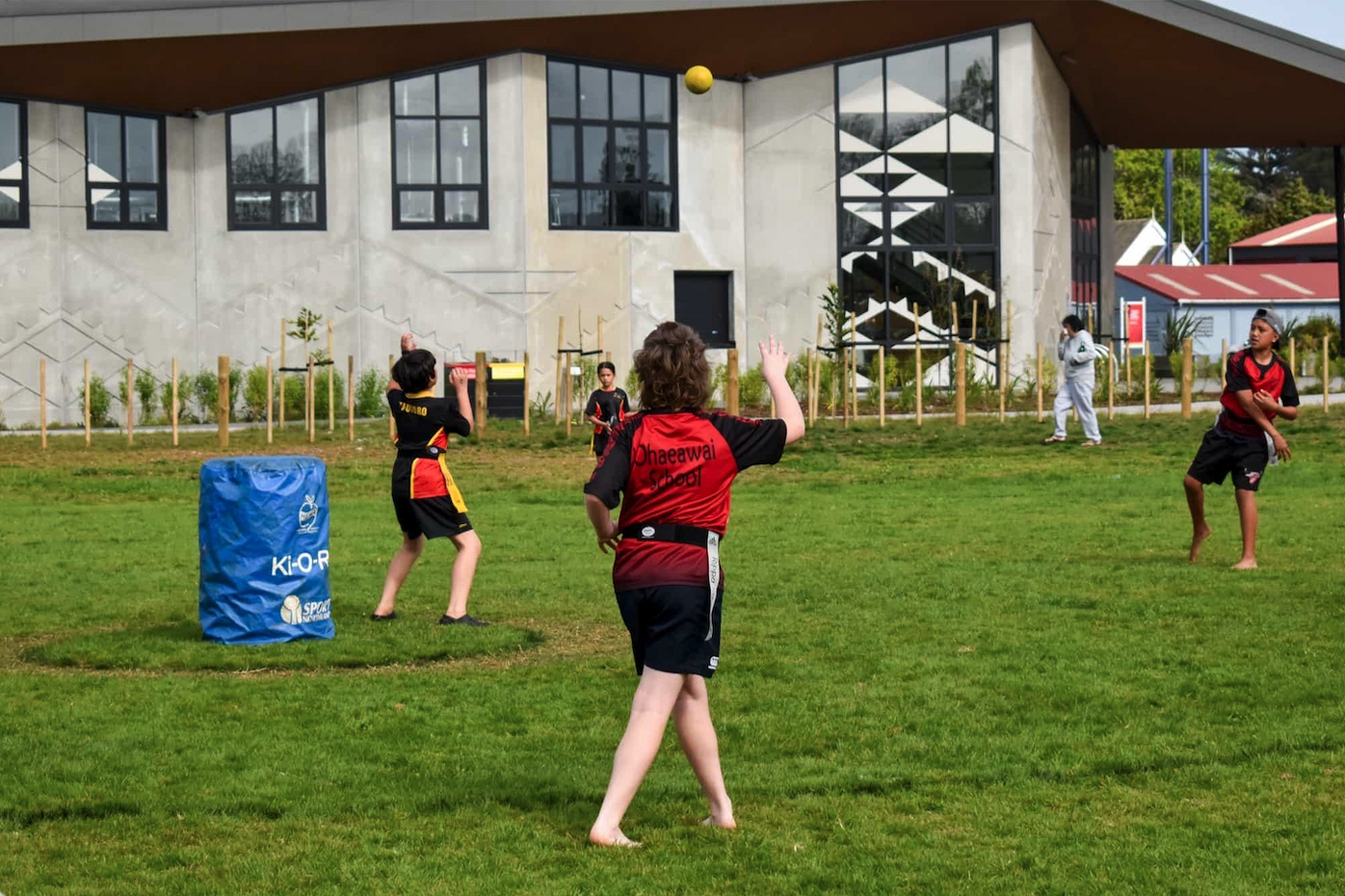
I was pleased to see pūrākau and tikanga named as knowledge to learn in the new curriculum, especially after seeing Te Ao Kori listed as choreography in the draft. Playing kī-o-rahi does not automatically mean students have learned the pūrākau or tikanga connected to it. We need to teach that knowledge.
Pūrākau and tikanga appear most explicitly under outdoor education in PE. That is a useful entry point, but why would we leave them there? Mātauranga Māori can inform learning across Health and PE. The same goes for knowledge of the environment. It can shape a game in the gym, movement on the school grounds or an outdoor experience.
At AUT, we use our local connection with kuaka to explore how knowledge of the environment can inform movement. Students learn how kuaka navigate and travel together, then use those ideas to shape a game. What local knowledge could inform movement learning at your school, and who could help guide that learning?
The curriculum gives limited guidance for teaching mātauranga Māori in depth. We need to understand where the knowledge comes from and work with those who can guide its teaching. But the headings do not have to decide where that learning happens. If we want students to learn in, through, and about movement, we need to look across them.
What goes into the next round?
There is no need to throw a good programme out of the ring because the curriculum has changed. Start with one unit your team already teaches. Put the new curriculum beside it and ask:
- What feels familiar? Which knowledge and practices are students already learning? What would we be in danger of losing if we changed this unit?
- What looks different? What is new, more specific or organised differently? What could we teach more clearly?
- What are we unsure about? Which terms need unpacking? Where do we need local guidance?
- What do we value? Do our teaching choices give students the learning and participation we say matter?
Keep what works. Choose one connection or gap to work on first. Look across the rest of the programme before assuming everything must fit into a single unit.
I am more hopeful about this curriculum than I was about the draft. The knowledge and practices give us something to work with. The gaps still matter, particularly the limited guidance for teaching mātauranga Māori across PE.
The curriculum sets out what students should learn and do. How we bring that learning to life is up to us.
Author bio: Amy Kaukau is a lecturer in Health and Physical Education at Te Wānanga Aronui o Tāmaki Makaurau | Auckland University of Technology. Her PhD research explored bicultural Physical Education in Aotearoa New Zealand.