Kāore i te Tau: This is not balance
Date: 17 Nov 2025
Opinion: As a Health and Physical Education specialist, my teaching is grounded in the concept of balance, or Tau. Catering to diverse needs and levels of capability can be difficult at times, as all balancing acts go. You need to offer a low floor and a high ceiling so that all are adequately challenged and supported. You need to identify buy-ins for contrasting interests, and present themes or ideas that all ākonga can see their perspectives represented in. You need to nurture and let fly, provide familiarity and intrigue, intensity and reprieve.
This balance, when found, ensures that all ākonga can succeed in accessing movements, connections, and practices that can enhance their Hauora. Contrastingly, the proposed draft Health and PE curriculum introduces significant factors that threaten to make this essential balance unnecessarily difficult, if not impossible, to achieve.
Alienating Contexts
The draft demonstrates a concerning trend toward over-sportification, prioritising competitive, formal sports contexts over inclusive, widely engaging movement experiences. This focus risks inherently excluding many ākonga who do not see themselves reflected in or succeed within traditional sports models, undermining the goal of lifelong physical activity for all that even governing New Zealand sports bodies advocate for.
Even more worrying is the language that indicates performance-based outcomes being prioritised over developing a love for movement. A specific example is the inclusion of numerous “fitness” elements, such as participating in Fartlek training and developing personalised fitness plans. In modern Health and Physical Education, there is no place for mandated personal data collection and performance measurement relating to fitness.
Genetics, socio-economic status, and personal experiences impact fitness more than anything we can meaningfully influence as educators, particularly with the meagre time slots suggested in the wider curriculum rollout. Our goal should be to foster agency, critical thought, and lifelong motivation, not to impose rigid self-measurement that can easily lead to comparison, self-consciousness, and a complete aversion to physical activity. Kāore i te Tau: This is not balance.
Fracturing Hauora
The proposed curriculum compounds its shallowness and emanates its own identity crisis through the fracturing of the previously interdependent Health and PE strands. This interdependence, where the two areas were taught synergistically, was once an internationally recognised element of strength in the Aotearoa New Zealand curriculum. By isolating and siloing these fields, the curriculum risks losing the depth that allowed ākonga to connect the physical experience of movement with the critical and reflective elements of Health. This separation undermines the foundational concept of holistic Hauora, replacing an integrated view with a disconnected one. Kāore i te Tau: This is not balance.
Individual Burdenism
Another core concept being dangerously eroded in the draft is the socio-ecological perspective - the understanding that an individual's health is deeply impacted by their community, environment, and societal structures. This perspective is crucial for empowering ākonga to analyse and question systemic inequities that lead to poor health outcomes. The draft's dominant instructional language pulls the focus back to the individual, effectively diluting the socio-ecological message. It repeatedly emphasises that ākonga should be equipped to "manage their own health" and make "informed decisions about their own healthy involvement."
While self-efficacy is important, this framing subtly reinforces an ideology where ākonga, rather than the environment or system, bears the primary burden of health. A socio-ecological view asks: "What systemic barriers make high-risk substances easily available in vulnerable communities?" The draft’s focus risks only asking: "What are the health risks, and how can I practise refusal skills?" Systemic barriers (such as poverty, racism, and lack of resource access) are not matters of 'personal choice.'
For those under-represented and disproportionately affected by inequity, this shift is not only dismissive, but damaging. It replaces collective empowerment and critical analysis with an individualised burden, reinforcing the very systems that create disparities. Kāore i te Tau: This is not balance.
Cultural Upheaval and Tokenism
As a Pākeha, nothing has shaped the depth and substance of the learning I provide more than my developing understanding and inclusion of Mātauranga Māori. My greatest concern lies in the draft's retreat from culturally grounded, equitable learning, signaling a sharp U-turn away from the deep bicultural commitment previously anchoring our practice. This is most evident in the drastic simplification (to put it lightly) of Sir Mason Durie’s Te Whare Tapa Whā (Māori health model).
The refresh explicitly removes the essential dimension of Taha wairua (spirituality / purpose / whakapapa) and disconnects Taha whenua (places of belonging and the codependence between health and the natural environment) from all aspects outside of outdoor education. The once culturally rooted, multidimensional framework has been gutted, with only the bare-bones, disjointed terms of Physical, Emotional, and Social Wellbeing.
For our Māori ākonga, who already experience disproportionately poorer health outcomes within a Westernised system, stripping the curriculum of this foundational Mātauranga Māori framework sacrifices the vital depth and holistic understanding of Hauora for a superficial checklist.
Furthermore, a truly purposeful curriculum for Aotearoa must involve the meaningful integration of te ao Māori beyond tokenism; placing interwoven cultural concepts within a rigid, year-by-year sequence defined by "essential knowledge" promotes conceptual assimilation, prioritising a structure that reduces these concepts to isolated facts and strips them of their intrinsic, embedded, and crucial pedagogical value. Kāore i te Tau: This is not balance.
The Impact
The combined impact of these changes signals a systemic retreat from bicultural commitment and a compounding of inequity in our Health & PE Curriculum. If the goal is genuinely educational excellence for all, then a foundation built on cultural erasure and individual blame is fundamentally flawed.
To my colleagues, mentors, and all those who have contributed their skill, knowledge, and empathy only to be marginalised in this process, I stand with you. As an educator and as Tangata Tiriti, I reaffirm my commitment:
- To ensuring equitable outcomes for all ākonga.
- To calling out practices that perpetuate imbalance in opportunities and representation.
- To meaningful, inclusive, and culturally grounded Health and Physical Education.
- To Te Tiriti o Waitangi and genuine partnership.
About the author
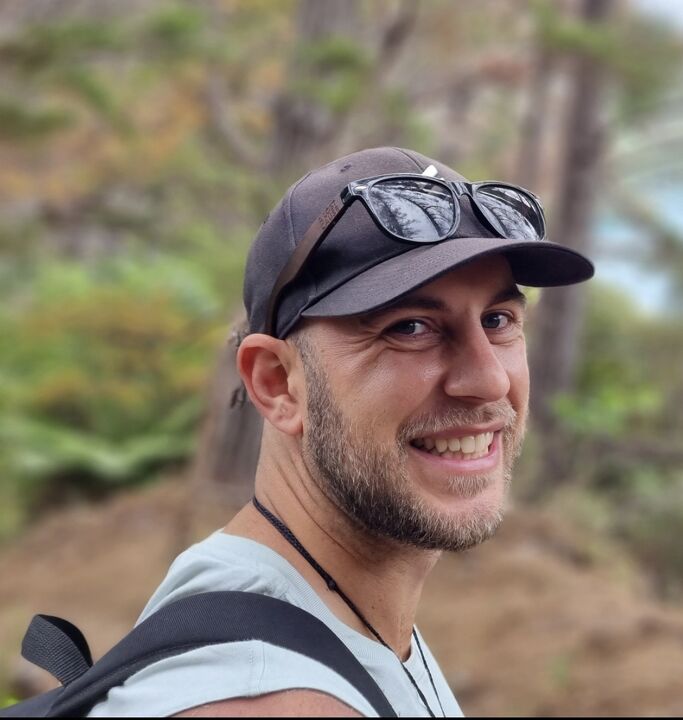
Thomas Hobbs is the EOTC, Health, and Physical Education Lead at Whakarongo School in Palmerston North, bringing a wealth of experience in designing engaging, inclusive, and safe learning experiences for ākonga (students).