
A Primary Take on the 2025 Draft HPE Curriculum
Date: 8 Dec 2025
Treading Water in Shifting Tides
He waka eke noa. As teachers, we are no stranger to this whakatauki. We know the power of unity and a common goal. It’s not hard to translate this into the HPE curriculum space. The Health and Physical Education curriculum is the waka. When it’s well-designed, well-resourced, well-supported, well-understood and guided with clarity, it moves smoothly and carries every learner with it.
There is no arguing the 2007 HPE curriculum is in need of a refresh, it is nearly 20 years old after all. I can see why the waka needed repairs. Times have changed, learners have changed, and our context in Aotearoa continues to evolve. We absolutely do need updated guidance, clearer direction, and a structure that helps teachers confidently design learning for today’s tamariki.
But what it does currently offer is a steady enough current: connected framework, inclusive, culturally grounded and best practice pedagogy, the ability to develop local, needs based curriculums, and a strong vision for physically educated students in Aotearoa, New Zealand.
The draft 2025 HPE curriculum, released in October, feels like stepping into unfamiliar waters. But as I read through the draft, I found myself treading water rather than moving forward, weighed down by gaps, siloed content, and unanswered questions that make the waka feel less sturdy than before.
A Narrower Voyage to Somewhere Less Certain
One of the most striking shifts in the draft is the narrowing of Physical Education. Instead of helping ākonga build holistic competencies, physical, emotional, social, cultural, the draft seems to anchor PE to specific, isolated skill knowledge and practices. Activities, movements, and capabilities are broken apart into smaller pieces that risk losing their meaning.
In practice, siloing PE like this could force teachers into a “checklist” mindset: Did they perform the movement? Did they demonstrate the skill? But movement is not separate from the mind, identity, wellbeing, relationships, challenge, culture, or confidence. When the curriculum pulls these threads apart, the overall weave becomes weaker.
Even more concerning is the growing disconnect between PE, Health, and Outdoor Education. In real classrooms, especially in primary settings, these areas are not separate. A walk through the school grounds, a game designed by students, a conflict resolution moment during play, a class activity exploring local spaces… these are rich, interconnected learning opportunities. The draft treats these strands like separate waka bobbing in the same waters, not as parts of the same waka working in sync.
Where Is Te Ao Māori in the Water We’re Navigating?
In a curriculum that claims to honour Te Tiriti and elevate te ao Māori, the absence of deep, practical connections is disheartening. Te ao Māori and mātauranga Māori should not sit at the shoreline as optional extras. They should be currents woven through the entire learning journey - guiding movement, creating relevance, and supporting culturally sustaining practice.
Instead, the draft positions Māori knowledge in ways that feel tokenistic and peripheral rather than foundational. This contradicts the very relationships and perspectives the curriculum purports to uphold, and leaves teachers without clear direction on how to ground HPE meaningfully in Aotearoa’s bicultural context.
Ableism and the Risk of Leaving Students Behind
A curriculum should be designed so every child can climb aboard the waka. But the way some of the draft outcomes are framed leans toward able-bodied assumptions. It expects particular types of movement, performance, or physical response that do not reflect the diversity of learners in our classrooms. Many students move differently, communicate differently, or experience challenge, confidence, and physicality in ways not represented in these narrow descriptors. If teachers can’t see their learners reflected in the curriculum, how will students see themselves in the learning?
Where Has the Critical Thinking Gone?
HPE has always been more than doing, it's long been about in, through and about movement. Students who are thinking, questioning, challenging, exploring, and making sense of themselves and others. Yet the draft’s heavy focus on observable physical outcomes leaves little room for critical thinking.
Where are the opportunities for learners to question norms, unpack equity issues, reflect on wellbeing, or explore social influences? In a world where young people are navigating digital overwhelm, shifting identities, climate anxiety, and complex social dynamics, removing space for critical inquiry is not just disappointing, it’s irresponsible.
A Curriculum Without a Compass
Perhaps the biggest concern is what’s missing. The draft raises far more questions than answers:
- How will teachers teach this in a way that is meaningful, relevant, and inclusive?
- How will assessment work when outcomes are so specific yet so narrow?
- What resources will teachers be given to enact this curriculum well?
- What funding will schools receive to support equitable access (equipment, spaces, training, PLD) so students in every community can engage fully?
- How are teachers supposed to identify and respond to student needs when the curriculum provides little flexibility for genuine localised design?
Without clear guidance, teachers, especially those without specialist training as is the norm in the Primary sector in NZ, may feel pressured to follow the curriculum literally, resulting in a technical, skill-based programme that lacks depth, diversity, and connection.
Losing the Joy and Connection That PE Should Offer
Perhaps the greatest loss would be the heart of PE: the joy, identity-building, social connection, and sense of belonging that movement can create. Every child deserves opportunities to feel confident, competent, and connected through physical activity. A curriculum that limits flexibility, disconnects learning areas, and restricts teachers’ ability to tailor programmes to their students risks making PE less engaging, less equitable, and less empowering.
Looking Forward: Strengthening the Waka Together
The draft curriculum acknowledges a need for clarity, progression, and relevance - needs we all agree with. It shows an effort to modernise and strengthen guidance for teachers who have long called for better support. But if we want a curriculum that truly carries all our learners forward, we must ensure the structure is strong, the strands are woven, and the journey reflects who we are as Aotearoa.
We have an opportunity, right now, to reshape HPE in ways that are holistic, inclusive, culturally grounded, and meaningful. The draft offers a starting point, but it needs substantial refinement. For the sake of the tamariki in our classrooms and the teachers guiding them, we must make sure this waka is built to carry everyone safely and confidently into the future.
About the author
Marisa McKay is an experienced and registered teacher, and Primary and Intermediate Subject Advisor at Physical Education New Zealand (PENZ). Marisa assists school leaders and teachers daily in evaluating and enhancing their curriculum and teaching practices, facilitates workshops to improve learner outcomes in physical education and contributes to the development of primary school PE resources. With her skilled facilitation and passion for physical education, Marisa is dedicated to supporting educators and improving physical education programs across New Zealand.
Back...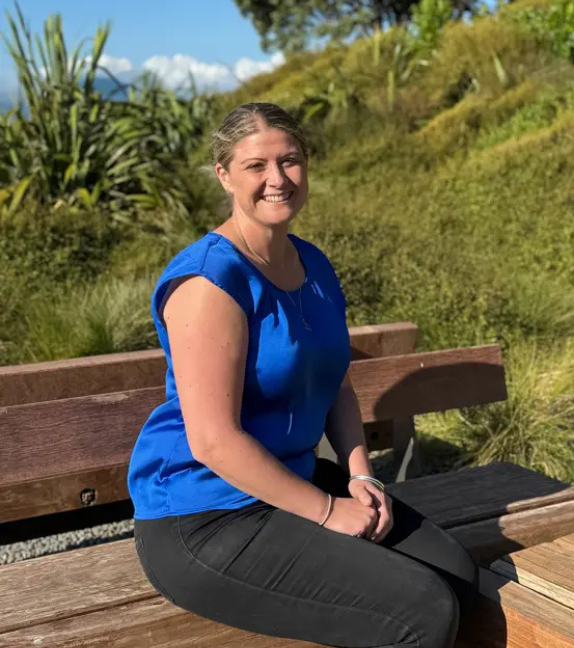
Stay connected with PENZ
Join the PENZ community for sector updates, practical resources, professional learning, member support, and a stronger collective voice for physical education.